
D-Day: world history on the doorstep
The holiday home lies in the middle of what was once a battle zone. Following the traces between Château Bernaville, Hill 30 and the wall of remembrance.

D-Day, the Allied landings in Normandy in June 1944, remains one of the defining events of your holiday region. Not only because there are numerous commemorations and the D-Day Festival around 6 June: people interested in history come to Normandy all year round.
Some are young people who can no longer ask the wartime generation what it was like. Others are still trying to find out what became of missing relatives. Many of the fallen were only recovered years later and could not be identified. The countless headstones reading “unknown soldier” speak of families who live with that uncertainty to this day – on the German as well as on the Allied side.
D-Day around Picauville
Ferienhaus Kranich lies in the middle of what was then a battle zone. The German 91st Air Landing Division had its headquarters at Château Bernaville. On the night of 6 June Lieutenant General Falley was on his way to Rennes together with Major Bartuzat. When they noticed the great numbers of aircraft filling the Norman sky, they turned back at once. At the mill near the château they ran into the paratrooper Malcolm D. Brannen and his group; both German officers were killed in the fighting.
Not all the men of the 2nd Battalion of the 508th Regiment of the 82nd US Airborne Division were able to jump that night. Only scattered troops landed in the marshes between Chef-du-Pont and La Fière. Lieutenant Colonel Shanley gathered around 300 men on a rise near the hamlet of Caponnet. Encircled on Hill 30, the paratroopers had to hold out for three days to keep the bridgehead on the Merderet – without enough food, water or ammunition. Only on 10 June did the 358th Regiment of the 90th US Infantry Division reach Picauville.
D-Day at Appeville
Events at Appeville were less dramatic. On the night of 5 to 6 June several paratroopers of the 101st Airborne landed there. They had jumped on the wrong side of the Douve and had to regroup. Across the flooded marshes that was only possible by boat; the inhabitants organised ferrying. While two wounded men were being transported, a German patrol opened fire.
Places of remembrance
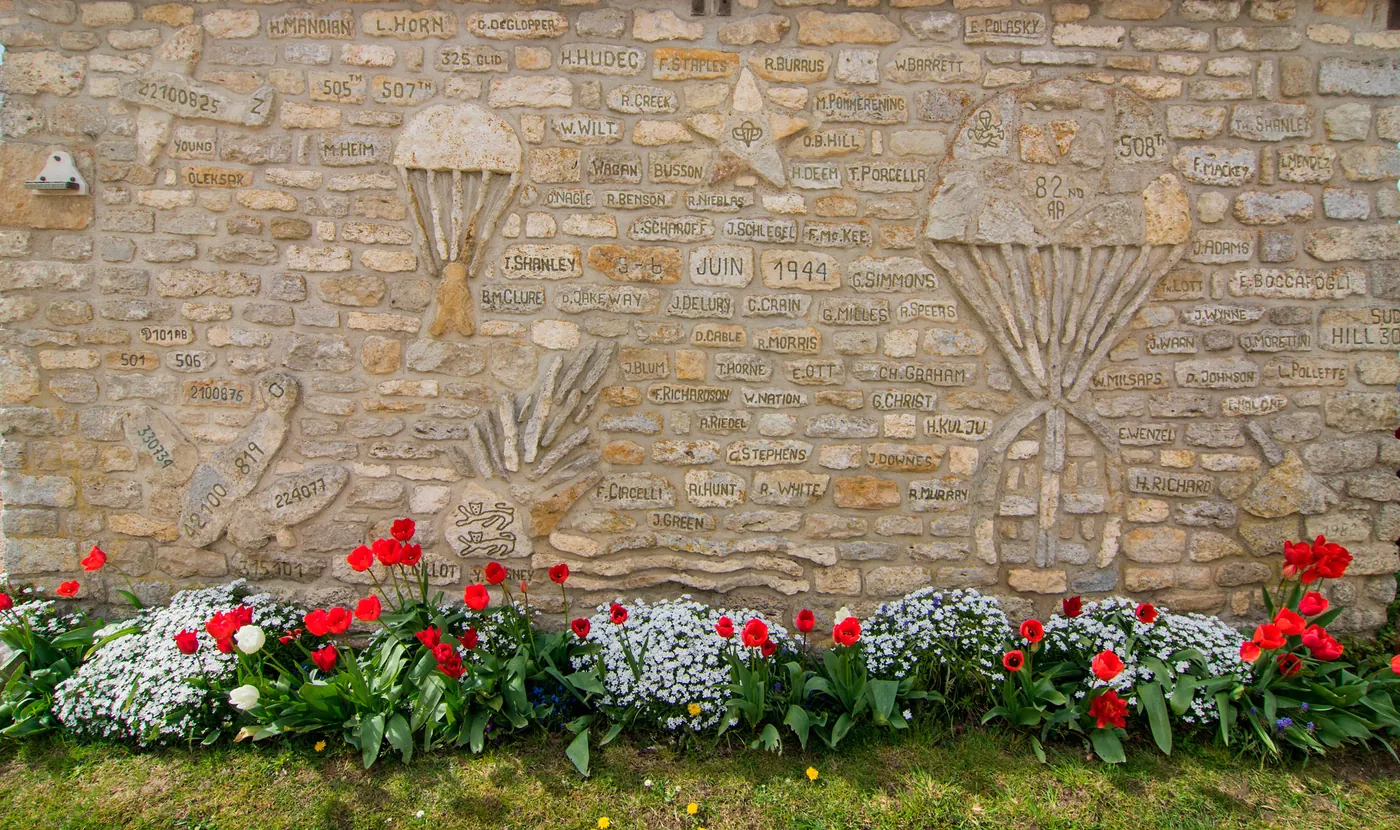
Lucien Hasley in Port Filiolet, a little north of the holiday homes, engaged with these events with great intensity. Ten years old at the time, he lived through occupation and liberation and worked his memories into the wall of his house as a bas-relief. The wall of remembrance shows paratroopers and falling aircraft; the names of the victims are engraved in the stones.
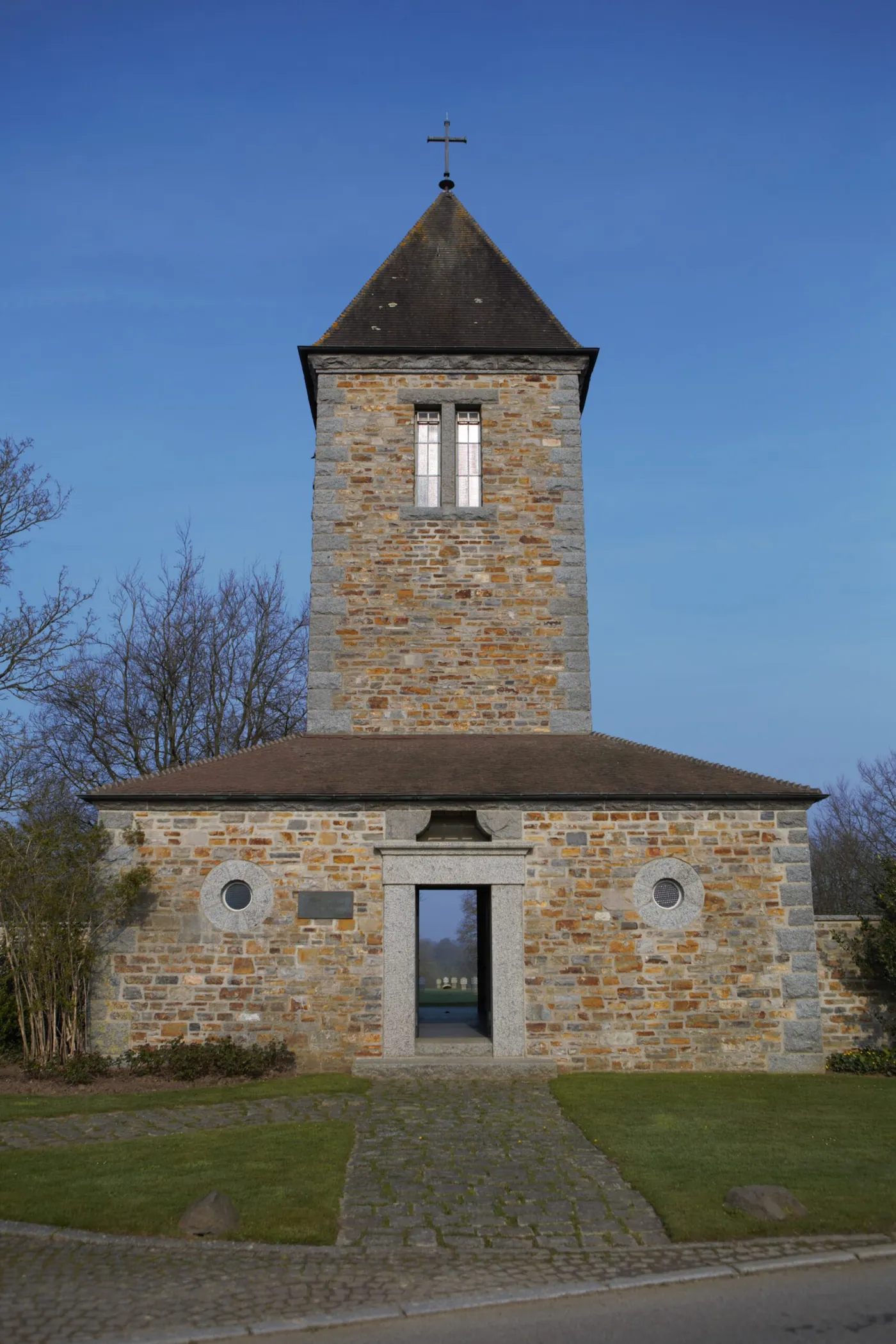
We also recommend a visit to the German war cemetery at Orglandes. 10,152 German soldiers are buried there, among them Lieutenant General Falley and Major Bartuzat. The cemetery is a few minutes’ drive from Picauville towards Saint-Sauveur-le-Vicomte and is well signposted. Equally moving are the cemeteries near Omaha Beach – the American one at Colleville and the German one at La Cambe.
Museums and places to visit
- Airborne Museum, Sainte-Mère-Église – one of the largest museums in the region. May to August daily 9 am to 7 pm, April and September 9.30 am to 6.30 pm, October to March 10 am to 6 pm. Closed in December and January (except during the French winter holidays). Times as of 2020 – please check the website before your visit.
- Batterie Crisbecq – a former German fortification. April to June and September to November 10 am to 6 pm, July and August 10 am to 7 pm (as of 2020 – please check the website before your visit). Dogs are welcome.
- Normandy Victory Museum, Carentan – an elaborately staged exhibition about the battle in the bocage.
- Sainte-Marie-du-Mont – the first village liberated by American troops, with an imposing church.
- Utah Beach – landing beach with museum and memorials.
A walk through Sainte-Mère-Église is worthwhile in any case: nowhere else will you find so many books and souvenirs on the subject of D-Day. An effigy still hangs from the church tower – in memory of the paratrooper John Marvin Steele, who had the misfortune to get caught there.
The D-Day Festival takes place every year from the end of May to mid-June and combines remembrance, history and a supporting programme. The full programme is available from the tourist offices in Sainte-Mère-Église and Bayeux.
Dogs are generally not allowed in museums or in war cemeteries. The Crisbecq battery is an exception.
Text: Barbara Homolka / chiennormandie.de · Photos: Barbara Homolka and Tanja Kranich
Back to all articles