

Rugged, wide and pleasantly undiscovered
The north-western tip of Normandy has everything you expect from the coast, only without the crowds.
The Marais du Cotentin
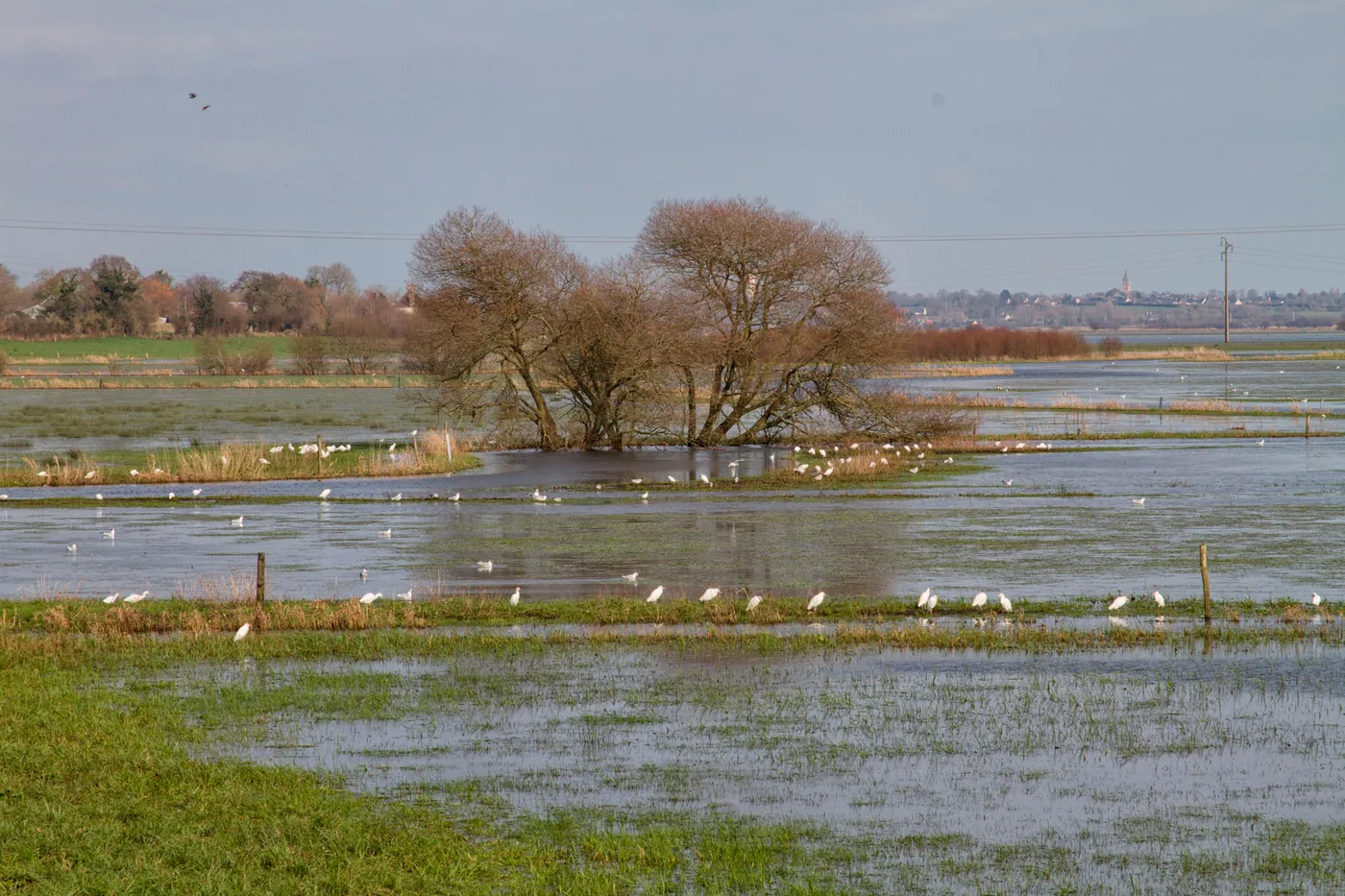
Both houses lie within the Marais du Cotentin et du Bessin regional nature park: 140,000 hectares, of which 30,000 are wetland. The wet meadows begin behind the garden of Maison les Grues. In summer cattle and horses graze here; in autumn the sluices are opened.
The meadows then turn into a lake landscape – an enormous mirror in which the Norman sky is reflected. Thousands of migrating birds stop here or spend the winter. Around five per cent of the French white stork population raises its young in the park.
4,600 kilometres of footpaths criss-cross the park, among them 18 short nature trails. Look for the wooden signs reading “Sentier Découverte”.

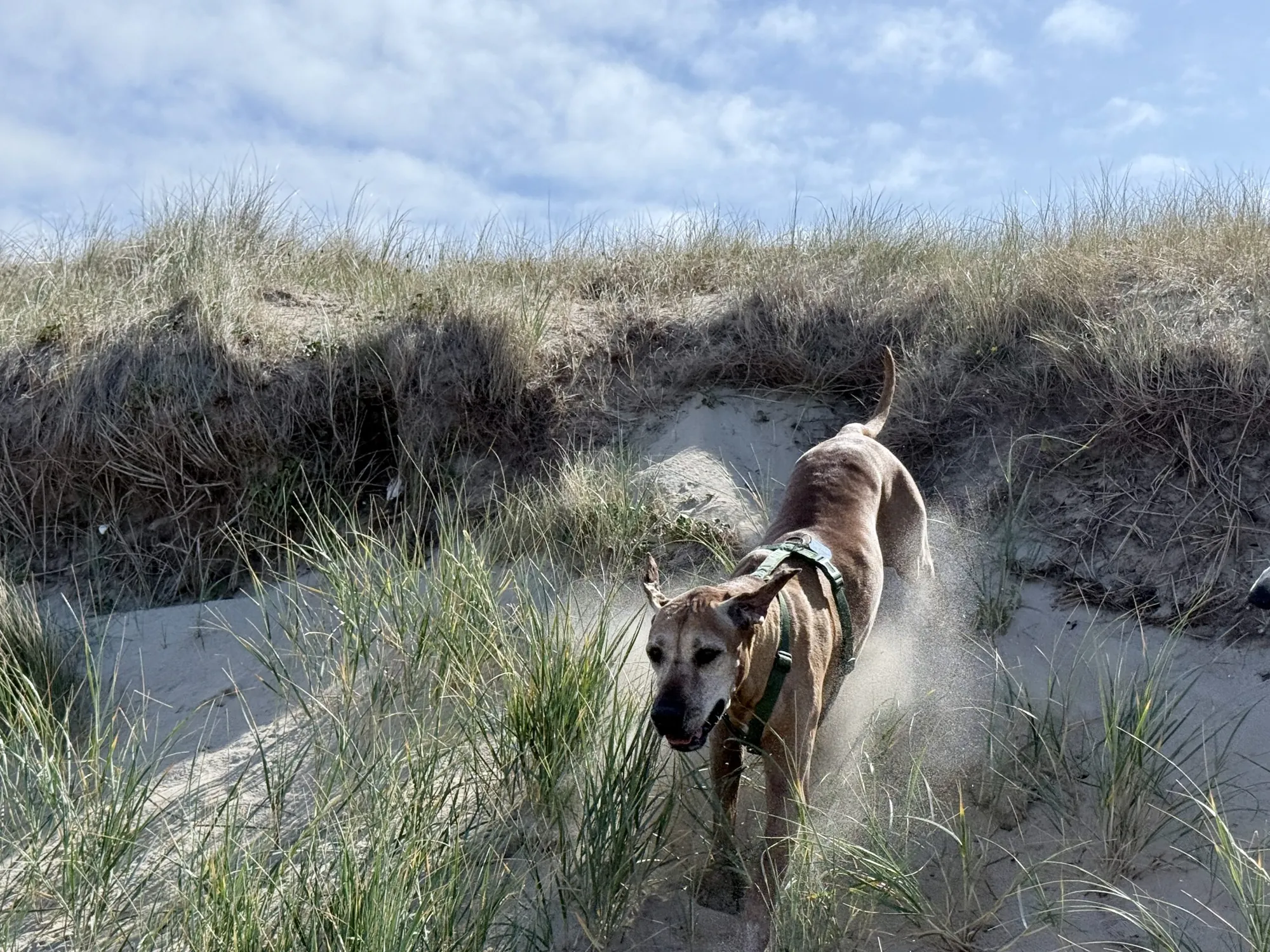
Beaches where dogs may run
The west coast of the Cotentin consists of miles of sandy beach and dunes. At low tide the water withdraws a long way – then you can walk for hours without meeting anyone.
The landing beaches lie on the east coast. At low tide wrecks are still visible there. On many beaches you can watch the oyster harvest.
The old customs officers’ paths along the coast, the Sentier des Douaniers, are also good for long walks.
6 June 1944 on the doorstep
The holiday homes lie in the middle of what was once a battle zone. In Sainte-Mère-Église, ten minutes away, an effigy still hangs from the church tower – in memory of the paratrooper John Steele, who was caught there.
The Airborne Museum in the village, the Crisbecq battery, the Normandy Victory Museum near Carentan and Utah Beach can all be reached in a good half hour. The German war cemetery at Orglandes is a few minutes’ drive away.
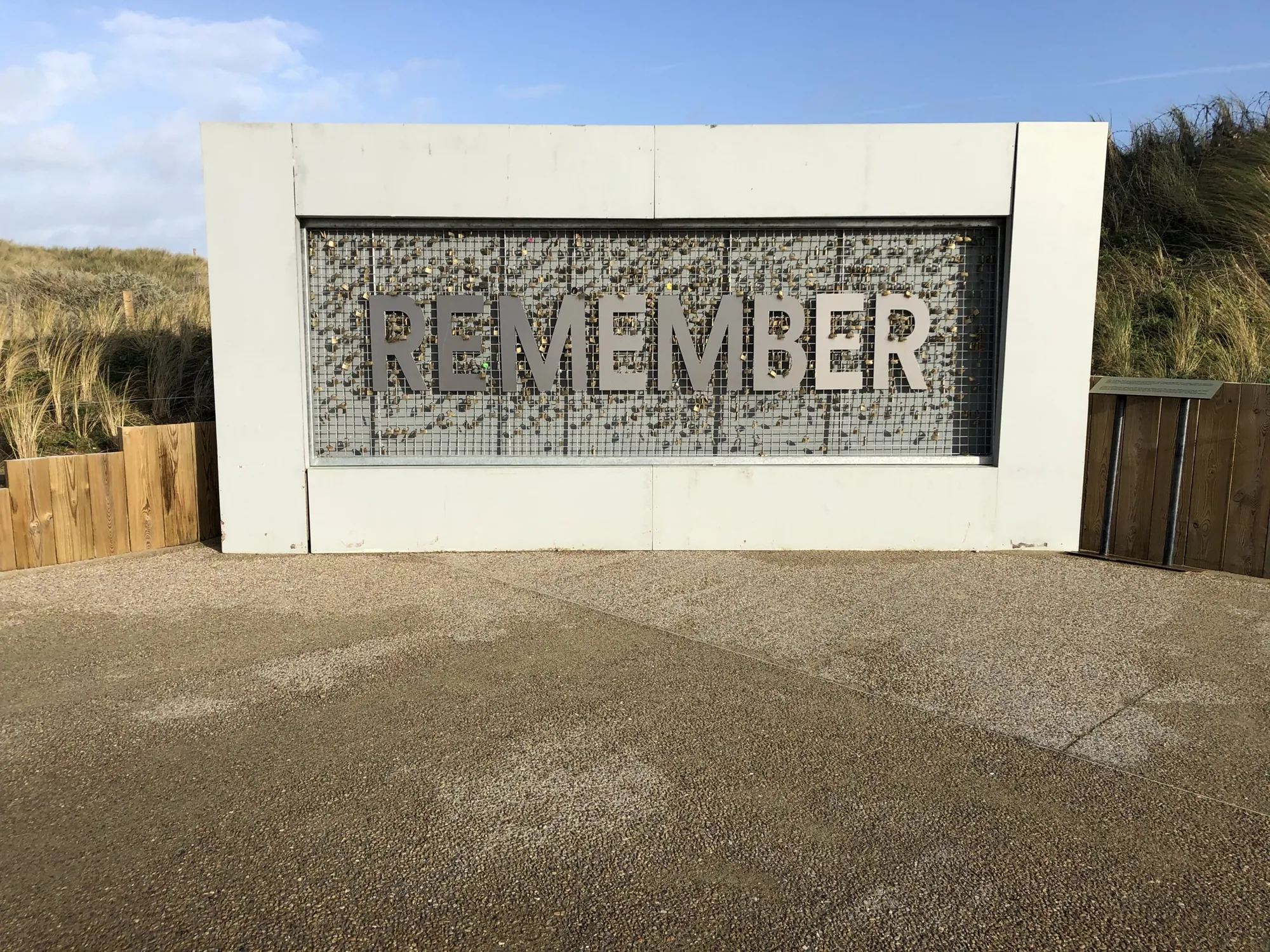
A quiet and very personal place is the “wall of remembrance” at Port Filiolet: a witness worked his memories of occupation and liberation into the wall of his house as a relief.
Please note: dogs are usually not allowed in museums, in war cemeteries or in the nature reserve. The Crisbecq battery, on the other hand, does admit them.

Cider, calvados and camembert
Normandy’s three famous “C”s taste different here from the way they taste on a supermarket shelf. Calvados originally comes from the Cotentin: the first written record of distilling cider is found in the diary of a nobleman from Le Mesnil-au-Val.
If you are driving through the countryside and see a sign reading “Calvados” at the roadside, the detour is almost always worth it. At the weekly markets tasting is expressly encouraged.
And then there are oysters from Saint-Vaast, mussels, salt-marsh lamb and the best brioche in Normandy at Le Vast.
Producers worth visiting
- Herout
36 route de Cantepie, 50500 Auvers - Pierre Guillotte
12 La Févrerie, Bolleville, 50250 La Haye - Domaine de Rugueville
1 Carrefour des Hougues, 50580 Portbail
Places worth the drive
Sainte-Mère-Église
10 minAirborne Museum, the church with the paratrooper, many bookshops on the subject of D-Day.
Utah Beach
25 minLanding beach with museum and memorials, wide sandy shore.
Carentan
20 minCapital of the marshes with its marina, Monday market and the Normandy Victory Museum.
Barfleur
1 h 15 minOne of the “most beautiful villages in France”, granite houses and the church of Saint-Nicolas (17th to 19th century) by the water.
Le Vast
1 hThe most photographed waterfall in Normandy and reputedly the best brioche in the world.
Mont-Saint-Michel
1 h 45 minPerfectly manageable as a day trip. Setting off early pays off.
Phare de Goury
1 h 20 minLighthouse on the wild north-western tip, Cap de la Hague.
Étretat
3 hThe chalk cliffs of the Alabaster Coast. A long but rewarding day.

How to reach us
The most comfortable way is by car. From the Rhine-Main area it is about 900 kilometres, from the Ruhr around 750, from Switzerland 900 to 1,000 depending on where you start. The route runs via Belgium or Paris on good roads.
If you would rather split the journey, there are plenty of dog-friendly stops halfway. Detailed directions are sent with the booking confirmation.
Travelling to France with a dog
- EU pet passport with a valid rabies vaccination
- Microchip identification
- Special rules apply in France to category 1 and 2 dogs; please check in advance
- On beaches, local lead requirements apply in high season
Entry requirements can change. Please check the current information from the French authorities before you travel.
A first look
When may we expect you?
Tell us which dates you have in mind and how many dogs are coming. We reply personally, usually the same day.