
Calvados: the best of the apple
Cider, calvados and camembert are Normandy’s three famous Cs. Calvados originally comes from the Cotentin – and tastes different at the producer than in a supermarket.

Cider, calvados and camembert – Normandy’s three famous Cs. All three can now be bought in Germany too. But to have the true Norman taste on your tongue you have to try them here, straight from the producer, with the Norman wind about your ears.
That is especially true of calvados. The craft products of the region bear no comparison with the industrial ware on supermarket shelves. Calvados was originally called eau de vie, the water of life. It tastes a little different at every distillery; each has its own recipe.
A short history
Did you know? Calvados originally comes from the Cotentin. While in Germany the name is often equated with the département of the same name, the original version eau de vie de sydre comes from the peninsula. The father of the spirit was a young nobleman: Gilles de Gouberville of Le Mesnil-au-Val in the Val de Saire. In his diary he recorded everyday matters, among them the distilling of cider – the first written record of the Norman spirit.
The water of life only really took off with the French Revolution, which allowed every farmer to distil the apples he had grown himself – if only ten litres a year. In the 19th century the name of the département of Calvados established itself for the apple brandy.
That calvados received a protected designation of origin is indirectly thanks to the German occupation: the military administration ordered the confiscation of all spirits production facilities, with exceptions only for cognac and armagnac. The agriculture minister of the day was a Norman and sought comparable protection for his home region’s national drink. So in 1942 Calvados Pays d’Auge was recognised as an appellation d’origine contrôlée.
A Norman cultural asset
Today there are three protected designations of origin: Calvados, Calvados Pays d’Auge and Calvados Domfrontais. The last is distinguished by a pear content of at least 30 per cent.
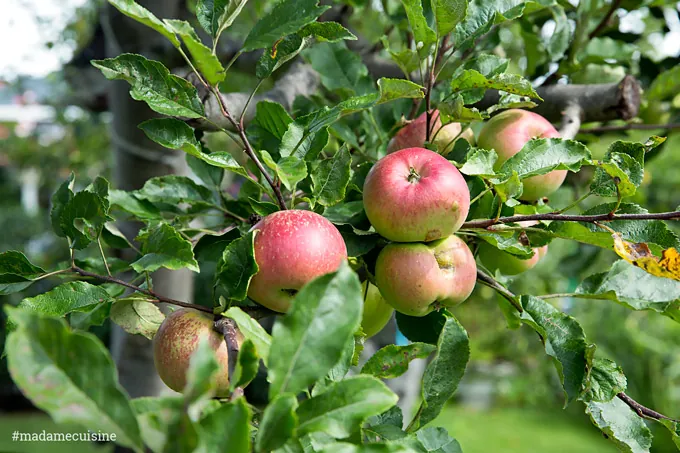
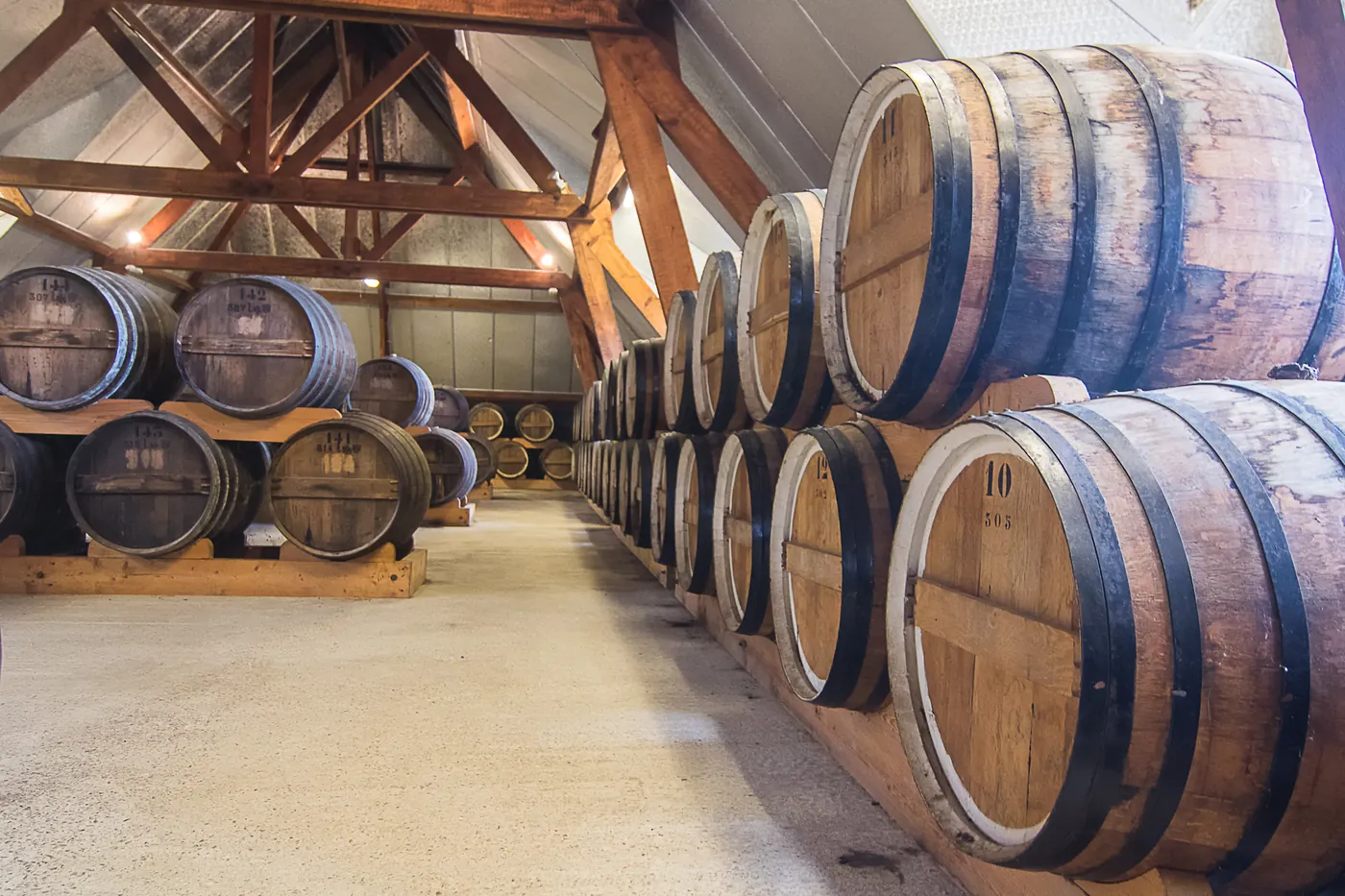
For a spirit to be called calvados, the entire production process from harvest to distillation must take place within the production area. Of the 110 apple varieties grown in Normandy, only 48 are officially permitted. Ideally the blend consists of 40 per cent sweet, 40 per cent bitter and 20 per cent sharp apples. Between must and calvados lie two distillations and several years’ ageing in oak casks.
Many distillers still travel the countryside with a mobile still to distil farmers’ apples on the farm itself. That tradition is under threat – with a little luck you may still spot one of these mobile stills in winter or spring in the marshes around Maison les Grues.
How to enjoy it
True Normans will tell you that calvados suits any occasion. Traditionally it is served between the courses of a meal – connoisseurs speak of the “trou normand”, the Norman hole, meant to make room for the next dish. It also works well as a digestif.
The ideal drinking temperature is 16 to 18 degrees. Use nosing glasses or special calvados glasses, ideally with a lid so that the aromas can develop. And whatever you do, do not knock it back.
Producers in the area
If you are driving through the countryside and see a sign reading “Calvados” at the roadside, the detour is almost always worth it. At the weekly markets tasting is expressly encouraged. Beyond that we recommend:
- Herout – 36 route de Cantepie, 50500 Auvers
- Pierre Guillotte – Vieux Presbytère, 12 La Févrerie, Bolleville, 50250 La Haye
- Domaine de Rugueville – 1 Carrefour des Hougues, 50580 Portbail
Text: Barbara Homolka / chiennormandie.de · Photos: Barbara Homolka and Tanja Kranich
Back to all articles