
The Marais du Cotentin: an incomparable landscape
In summer cattle and horses graze here; in winter the water reaches almost to the garden fence. What lies behind the mysterious marais.

Our holiday home Maison les Grues lies only a stone’s throw from the little river Douve. In summer you see cattle and horses grazing; in winter the water can come almost up to the boundary of the plot. Why is that?
Why “half” an island?
In earlier times this stretch of north-western Normandy really was almost an island. Only at Carentan, the capital of the marshes, and along a narrow strip of land in the heaths of Lessay could you get from north to south with dry feet. When the Vikings took the Cotentin, they are said to have sailed along the rivers from one coast to the other.
People who settle need arable land and pasture. From the 18th century onwards the inhabitants began to drain the area with what are called portes à flots. These gates close automatically when the tide comes in and open at low tide to let the water run off. In this way land was wrested from the sea – at least in spring and summer.
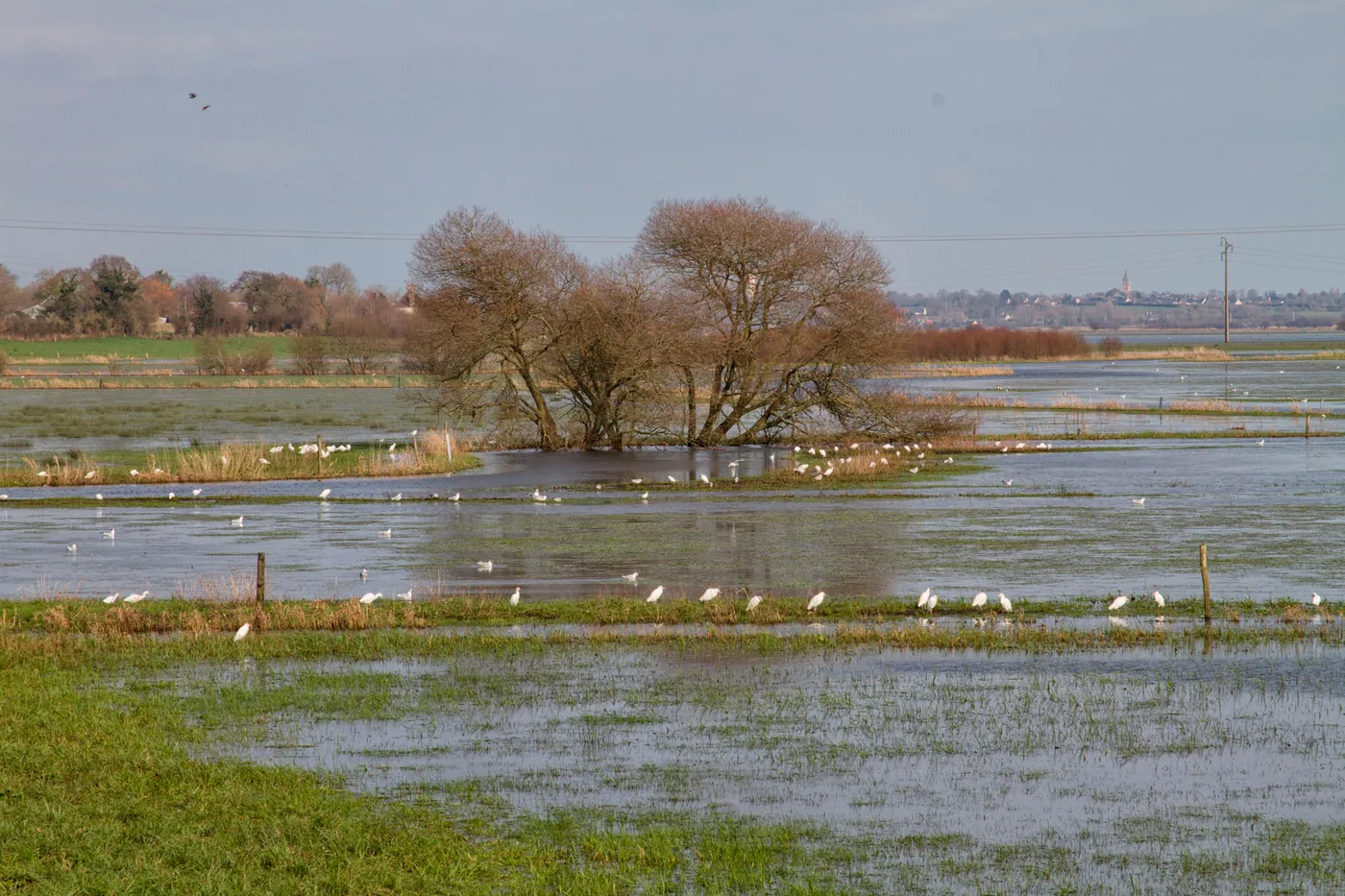
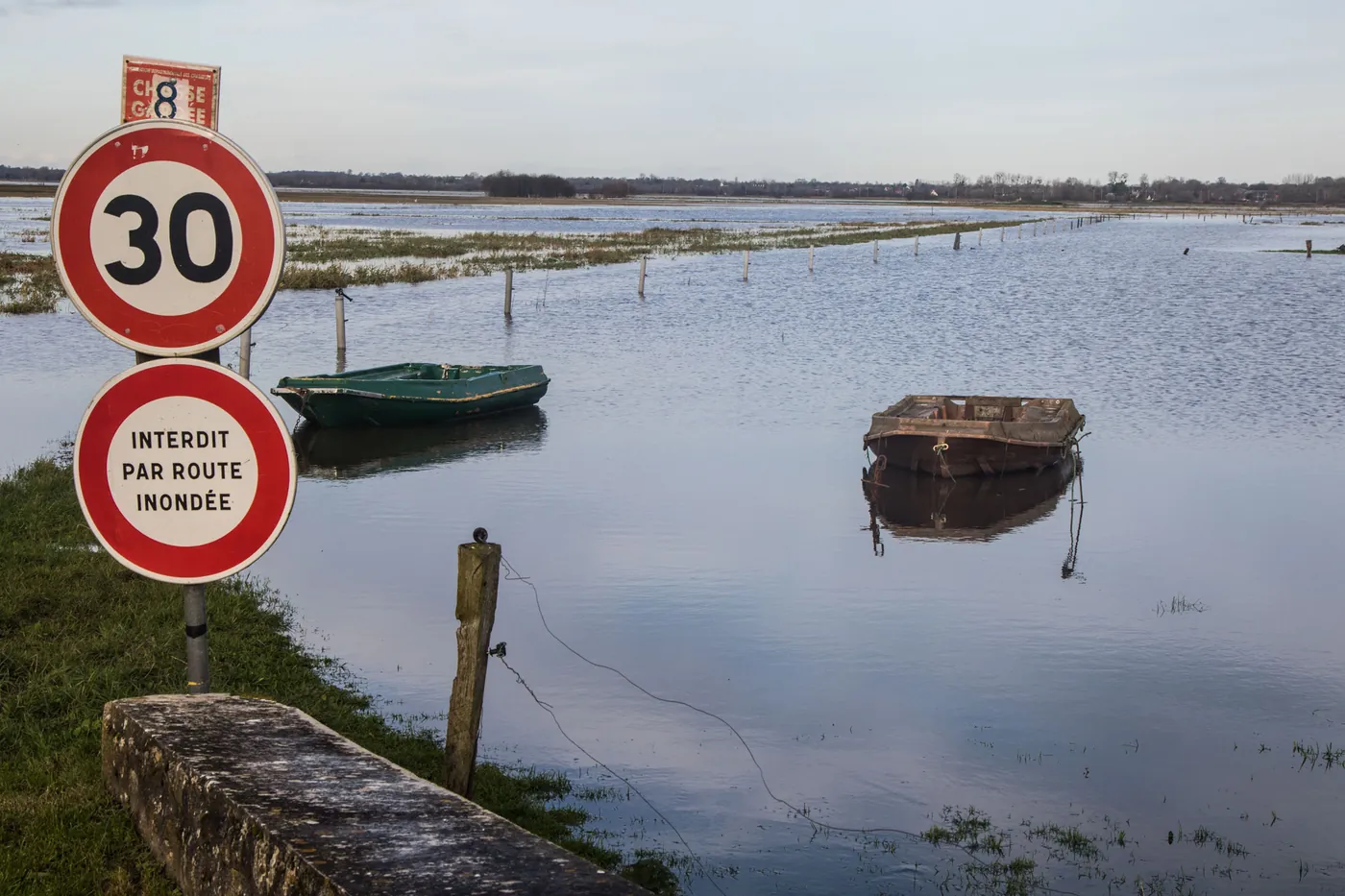
When heavy rain falls on the Cotentin in autumn and winter, the rivers burst their banks and the marshes become an endless lake landscape: a gigantic mirror in which the sky is reflected.
The Marais du Cotentin et du Bessin nature park
The high ecological value of the wetlands was recognised as early as 1991 and a protected area was founded. Today 74,000 people live in the park in 150 communes across 140,000 hectares, of which 30,000 are wetland. It takes in the marshes of the Douve, the Aure, the Ay, the Taute and the Vire, along with the salt meadows of the west coast, the labyrinth of bocage hedgerows, heaths, bogs and the coastline at the Baie des Veys.
Besides migrating birds and winter visitors, the park matters as a breeding ground: around five per cent of the French white stork population raises its young here, along with 30 per cent of all French yellow wagtails. The park is home to otters and, on the east coast, to seals. Look carefully and you will find orchids and carnivorous plants, fire salamanders, alpine newts and various wild bees.
Experiencing the nature park
The simplest way is from the house itself. Drink your first coffee in the conservatory or relax in the barrel sauna looking out over the “white” marshes. Binoculars are provided. In summer you will see the storks searching for food for their young; at night the starry sky is extraordinarily clear.
A particularly quiet spot is the hamlet of Longuerac, a few minutes’ drive away, with a wide view across the marais.
Footpaths
The nature park has a substantial 4,600 kilometres of footpaths. Among them are 18 short nature trails that lead into the marais over a short distance – simply follow the wooden signs reading Sentier Découverte. When the water is high in winter many routes are impassable; in spring a great many open up again.
One tip: the short circular walk at Plessis-Lastelle. From the keep you have a magnificent view over the marshes and the peat bog of Baupte. Along the way you will meet a special “breed of dog” – the chien des marais, a tree trunk fossilised in the bog into bizarre shapes.
On the water
In the summer months excursion boats operate on the Douve and the Taute. The trip on the “Barbey d’Aurevilly” along the Douve runs from May to September and lasts three hours. The commentary is in French only; dogs may come aboard.
La Maison du Parc, the visitor centre, presents exhibitions and films about the park’s natural world across 500 square metres. It is closed from the beginning of December until the French Christmas holidays, but admission is free until mid-March (as of 2019 – please check the website before your visit). Unfortunately dogs are not allowed there.
Text and photos: Barbara Homolka
Back to all articles